Agentic AI in Campus IT Operations: Opportunity, Risk, and What University Teams Need to Know in 2026
April 20, 2026
Why Enterprise IT Teams Are Moving from Siloed Monitoring to Unified Observability
May 15, 2026
Hybrid Learning Is Permanent, The Infrastructure Must Match.
Hybrid learning has become a permanent feature of higher education, evolving from the emergency shift to remote learning in 2020. During that time, universities rapidly improvised their digital infrastructure — scaling learning management systems, adopting video conferencing platforms at unprecedented speed, and ensuring network performance was sufficient for the crisis. Five years later, that same infrastructure, once considered adequate for a temporary situation, is now expected to consistently deliver a high-quality experience to tens of thousands of students as part of a long-term academic model.
The stakes are measurably high. Student satisfaction with digital learning platforms directly influences retention decisions. A student who consistently experiences poor video quality in virtual lectures, slow loading of course materials, or intermittent access to assessment platforms is a student whose engagement — and persistence — is at risk. In an environment where enrollment pressures are significant for many institutions, the quality of the digital learning experience has become a competitive differentiator.
Yet most university IT teams monitor the digital learning experience the way they monitored it in 2015 — through infrastructure metrics and helpdesk ticket volume. If the server is up and the network is technically operational, the assumption is that students are having a good experience. That assumption is increasingly wrong, and the gap between what infrastructure metrics show and what students actually experience is where significant educational value is being lost.
The Gap Between Technical Performance and Student Experience
A university network can be performing within all technically defined thresholds while students are having a frustrating experience. This happens because digital experience is the result of many independently acceptable components whose aggregate behavior can produce unacceptable outcomes. A 50-millisecond API response time from the LMS, combined with a 100-millisecond video stream buffering delay, and a 2-second content delivery network latency for course materials, produces an experience that feels sluggish and unreliable — even though every individual component is within nominal parameters.
Traditional monitoring tools are optimized for component-level health checks. Digital Experience Assurance requires a different analytical approach: understanding the user journey end to end, correlating component-level performance data with the experience being delivered, and detecting degradation at the point where student experience is affected rather than at the point where infrastructure metrics cross thresholds.
The measure of a university network is not whether the infrastructure is technically operational. It is whether the student working from a residence hall, attending a remote lecture, submitting an exam, or accessing research databases is having the experience the institution promised to deliver.
Key Digital Experience Scenarios Universities Must Monitor
Live lecture streaming and video conferencing
Video quality in live sessions is acutely sensitive to network jitter, latency variability, and packet loss — conditions that may be invisible in aggregate bandwidth metrics but produce pixelated video, audio dropouts, and session disconnections for students on specific network paths or with specific device configurations. Monitoring the quality of video streams end-to-end — from the faculty member’s endpoint through the campus network and CDN to the student’s device — requires observability infrastructure that spans all of these components.
Assessment and exam platforms
The consequences of performance degradation during assessments are severe and irreversible. A student who loses connection during an online exam, experiences session timeouts due to slow API responses, or cannot submit work due to upload failures has experienced not just a technical inconvenience but a potentially grade-affecting event. These scenarios require zero-tolerance monitoring with immediate alert escalation and, where possible, predictive detection that identifies emerging performance risks before assessments begin.
Research database and library access
Research-intensive universities provide access to databases, journal archives, and specialized research tools that require consistent, low-latency connectivity. Degraded access to these resources affects research productivity, grant deliverables, and the faculty and graduate student experience. Monitoring access performance to research databases as an operational priority — not just as a component of general network health — reflects an understanding of what university performance actually means.
What Digital Experience Assurance Looks Like in Practice
The Ennetix AIOps platform extends traditional network and application monitoring to the user experience layer through its Digital Experience Assurance capability. Rather than measuring whether infrastructure components are healthy, xVisor measures what students and faculty are actually experiencing — correlating network performance data from XOME, application response data, and endpoint activity from xTend to construct a view of the actual experience being delivered at the user level.
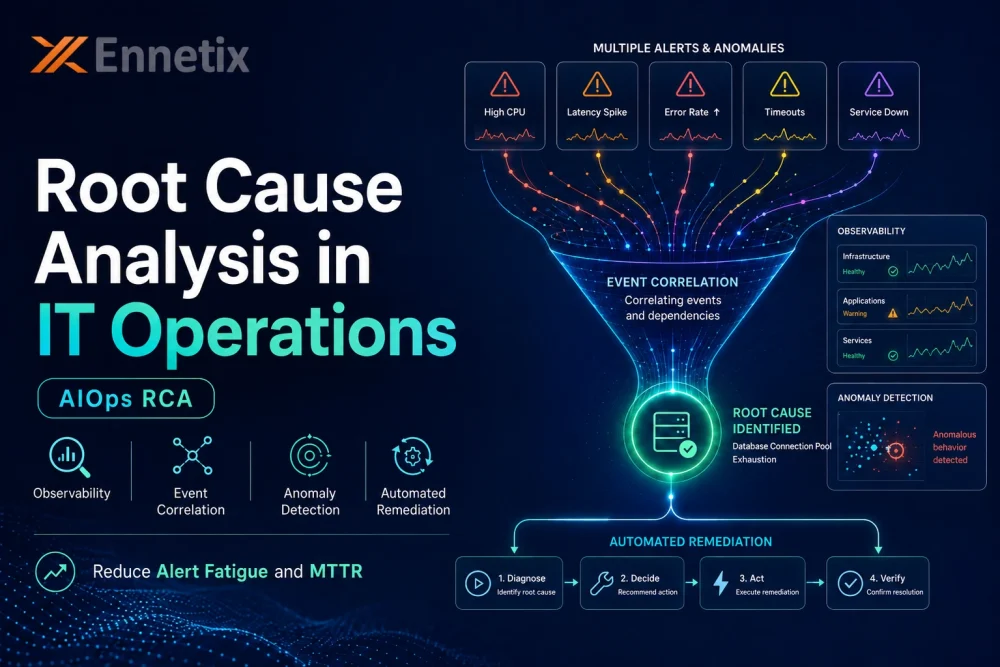
When xVisor detects that a subset of users accessing the LMS from a specific campus network segment are experiencing elevated response times, the platform correlates this observation with network path data to identify whether the issue originates in the campus network, the application tier, or the CDN serving content. This correlation capability is what transforms monitoring from a reactive alert tool into a proactive management platform — identifying issues in their early stages, before they produce the helpdesk calls and student complaints that indicate a degraded experience is already in progress.
For university IT teams, the shift from infrastructure monitoring to digital experience assurance is not just a technology change — it is an operational philosophy change. It places the student’s experience, not the infrastructure’s technical health, at the center of what the IT function exists to protect.
FAQs
Digital Experience Assurance for online learning helps university IT teams monitor the actual student and faculty experience across LMS platforms, video lectures, exam portals, research databases and endpoint devices. It goes beyond basic uptime checks by identifying where performance issues affect real users. Learn more about Ennetix Digital Experience Assurance.
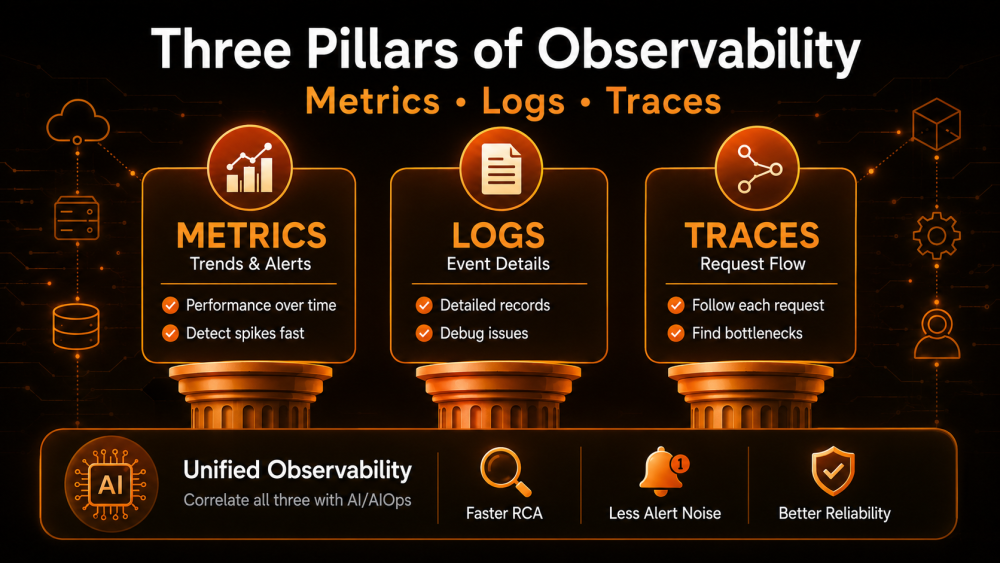
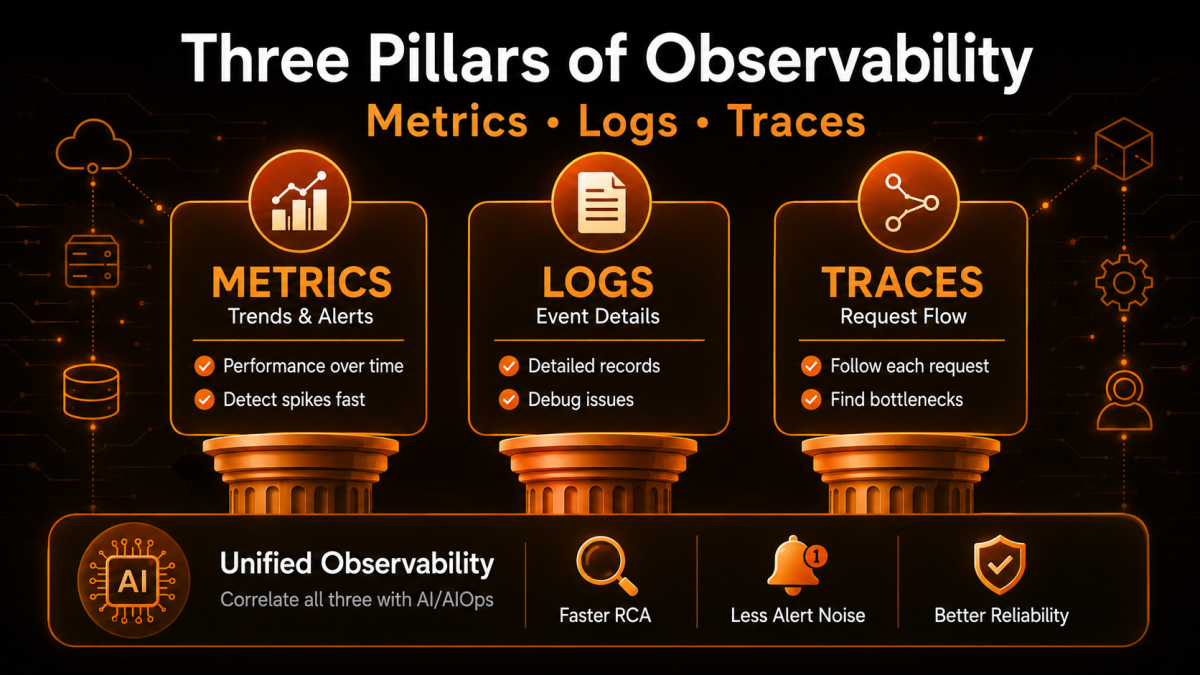
Each siloed tool captures only its domain — network, application, or infrastructure — so engineers must manually correlate across dashboards during an incident. That translation overhead is where hours are lost. Unified observability eliminates it by automatically linking signals across domains into a single root cause. Learn how AI drives this in How AIOps Transforms Network Anomaly Detection.
Universities can monitor student experience by tracking LMS response time, video quality, application latency, endpoint performance, packet loss, authentication delays and transaction success rates. A Digital Experience Assurance approach gives IT teams an end-to-end view of how students access learning systems across campus, remote locations and devices. Explore Ennetix solutions for Academia.
Digital Experience Assurance helps online exams by detecting performance degradation before it causes login failures, session timeouts, upload errors or submission delays. It allows IT teams to monitor critical exam workflows in real time and respond before technical issues affect students. For faster issue identification, see Ennetix Root-Cause Analysis.