Downtime has always been viewed as the ultimate failure in IT operations. It is visible, measurable, and disruptive. However, a quieter and more persistent problem is now causing greater long-term damage across organizations.
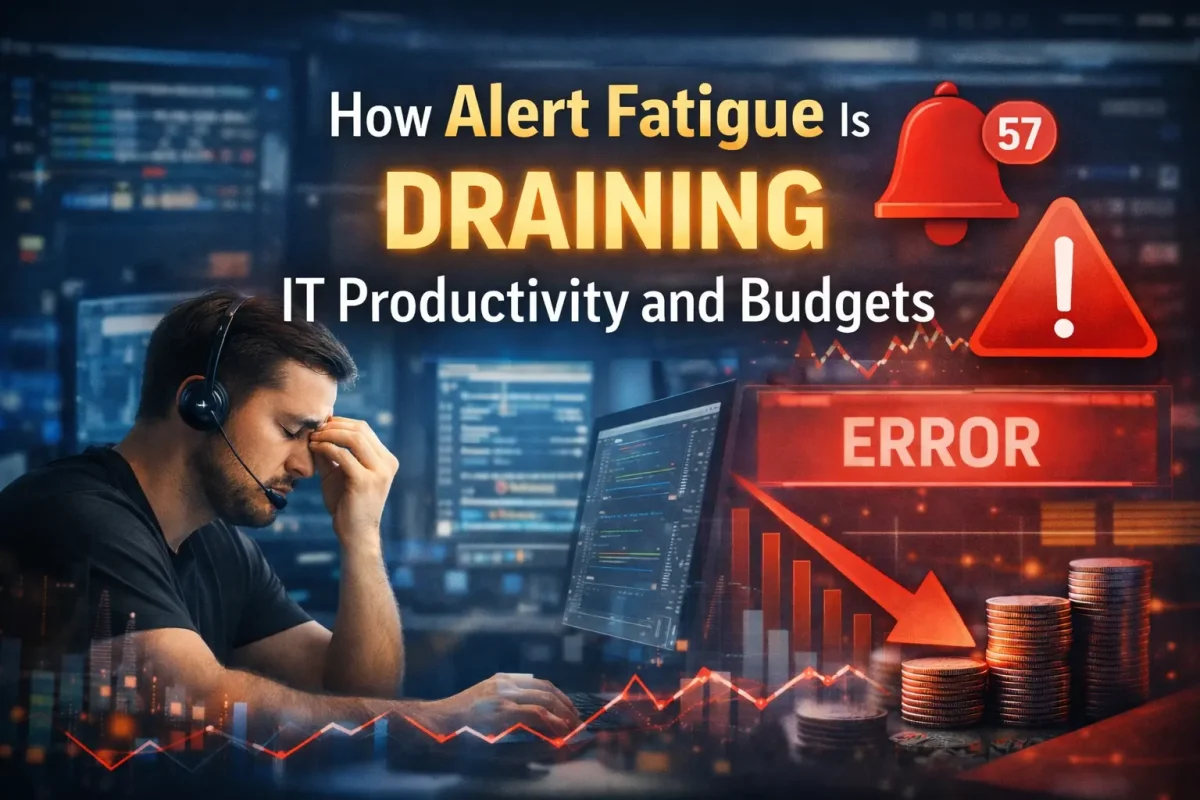
While downtime incidents may be occasional, alert fatigue impacts IT teams every single day. It slows response times, increases operational risk, and gradually erodes trust in monitoring systems. In many cases, the cost of alert fatigue exceeds the cost of downtime itself.
What Is Alert Fatigue in IT Operations?
Alert fatigue occurs when IT teams are overwhelmed by a high volume of alerts, many of which are low priority, redundant, or false positives. Over time, teams become desensitized to alerts and begin to ignore, delay, or manually verify them.
This is not a people problem. It is a systems problem.
Alert fatigue is most common in environments where monitoring tools operate in silos and generate alerts without context or correlation.
Why Alert Fatigue Has Become a Widespread Issue
Modern IT environments are complex by design. Hybrid infrastructure, cloud services, distributed applications, and remote users have increased both data volume and alert generation.
Several factors contribute directly to alert fatigue:
Tool Sprawl
Organizations often deploy multiple monitoring and security tools, each generating its own alerts. These tools rarely communicate with each other, leading to duplicated and conflicting notifications.
Static Thresholds
Traditional monitoring relies on predefined thresholds that do not adapt to changing workloads. Normal behavior can trigger alerts, while abnormal behavior may go unnoticed.
Lack of Context
Many alerts indicate that something has happened, but not why it happened or what it affects. Without context, alerts create more questions than answers.
No Prioritization by Impact
Alerts are frequently treated as equal, even though their business impact varies significantly. Critical alerts get lost among low-value noise.
The Hidden Cost of Alert Fatigue
Alert fatigue does not always appear on incident reports, but its effects are measurable and damaging.
Slower Incident Response
When teams no longer trust alerts, response is delayed. Engineers spend time verifying issues manually instead of acting immediately. This increases mean time to detection and resolution.
Increased Human Error
Alert overload leads to cognitive fatigue. Under constant pressure, teams are more likely to miss critical signals or misjudge severity.
Reduced Operational Efficiency
A large portion of IT time is spent triaging alerts rather than improving systems, optimizing performance, or preventing incidents.
Security Blind Spots
Alert fatigue is especially dangerous in security contexts. When anomalous behavior blends into alert noise, genuine threats can go undetected until damage is done.
Over time, this constant strain leads to burnout, attrition, and loss of institutional knowledge.
Why Alert Fatigue is Worse Than Downtime
Downtime is disruptive, but it is episodic. Alert fatigue is continuous.
Downtime:
Happens occasionally.
Triggers immediate response.
Is often resolved with post-incident analysis.
Alert fatigue:
Happens every day.
Gradually degrades response quality.
Weakens systems silently over time.
Organizations that focus only on reducing downtime often overlook the operational debt created by persistent alert overload.
What Makes an Alert Valuable?
Not all alerts are bad. The problem is not alerting itself, but how alerts are generated and consumed.
High-value alerts share common characteristics:
They are correlated across systems.
They provide context and probable cause.
They are prioritized by impact.
They are actionable, not informational noise.
Alerts should support decision-making, not interrupt it.
Moving Beyond Alert Noise with Intelligent Observability
Reducing alert fatigue requires a shift from alert-centric monitoring to intelligence-driven observability.
This approach focuses on:
Unified visibility across infrastructure, applications, networks, and users.
Real-time and predictive anomaly detection instead of static thresholds.
Automated correlation of events and metrics.
Root cause identification instead of symptom reporting.
When alerts are generated based on behavior and impact, teams regain confidence and act faster.
Alert Fatigue as a Maturity Indicator
Alert fatigue is often a sign of operational immaturity, not lack of effort.
As organizations mature, they move through stages:
From reactive monitoring to unified observability.
From manual triage to automated correlation.
From alert overload to insight-driven action.
Reducing alert fatigue is not about suppressing alerts. It is about improving signal quality.
How Ennetix xVisor Addresses This
xVisor reduces alert fatigue by consolidating and correlating alerts across tools and domains. By prioritizing alerts based on impact and behavioral deviation, it minimizes noise while preserving critical signals. This allows teams to focus on meaningful issuesrather than triaging repetitive or low-value alerts throughout the day
Final Thoughts
Alert fatigue is not just an inconvenience. It is a systemic issue that quietly increases risk, slows response, and drains operational efficiency.
While downtime is visible and urgent, alert fatigue is persistent and costly. Organizations that address it early gain faster response times, stronger resilience, and more confident IT teams.
For teams evaluating observability platforms, AI for IT operations, or automated anomaly detection, understanding the real cost of alert fatigue is a critical first step toward sustainable IT operations.