









Modern IT environments generate millions of performance events and security signals every day. Join this expert-led webinar to explore how unified observability transforms the way enterprises monitor, detect, and respond.
Free · Live · Limited seats
Modern enterprises operate across complex environments: cloud infrastructure, on-premises systems, distributed applications, and multiple security tools. While monitoring solutions exist, they often work in isolation, creating blind spots that delay detection and resolution.
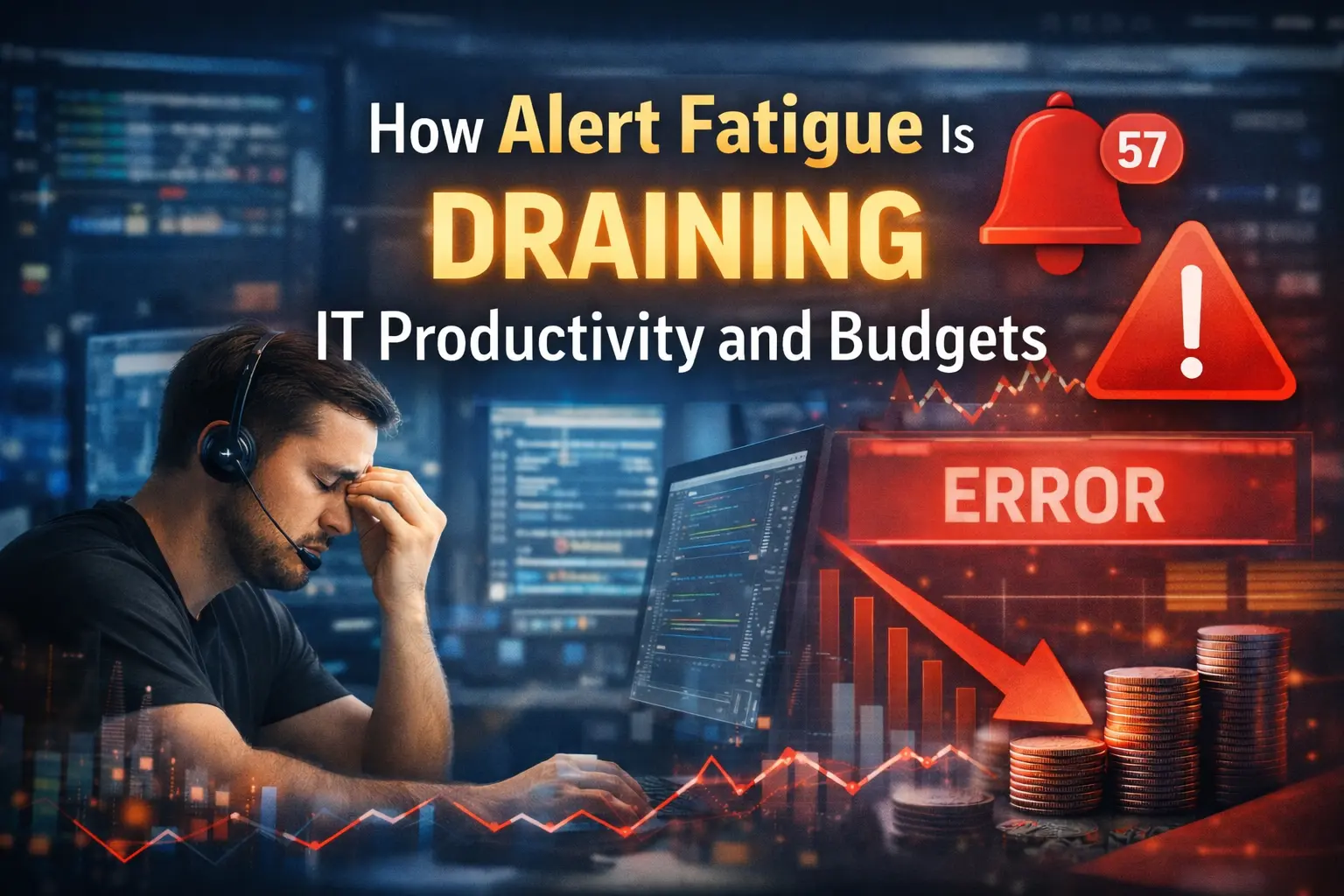
Disconnected monitoring tools generate overwhelming noise, making it nearly impossible to identify what truly matters before it escalates into a critical incident.
Cloud, on-prem, and distributed systems emit signals no single tool was built to correlate. Gaps in visibility across hybrid IT create gaps in protection.
When performance and security live in separate silos, neither team has the full picture and the real cause of an incident often surfaces hours too late.
Practical insights into how organizations are improving operational efficiency and security visibility through unified observability, patterns you can apply immediately.
Why traditional monitoring tools struggle to keep up with modern IT complexity and how the gap impacts your team's ability to detect and respond.
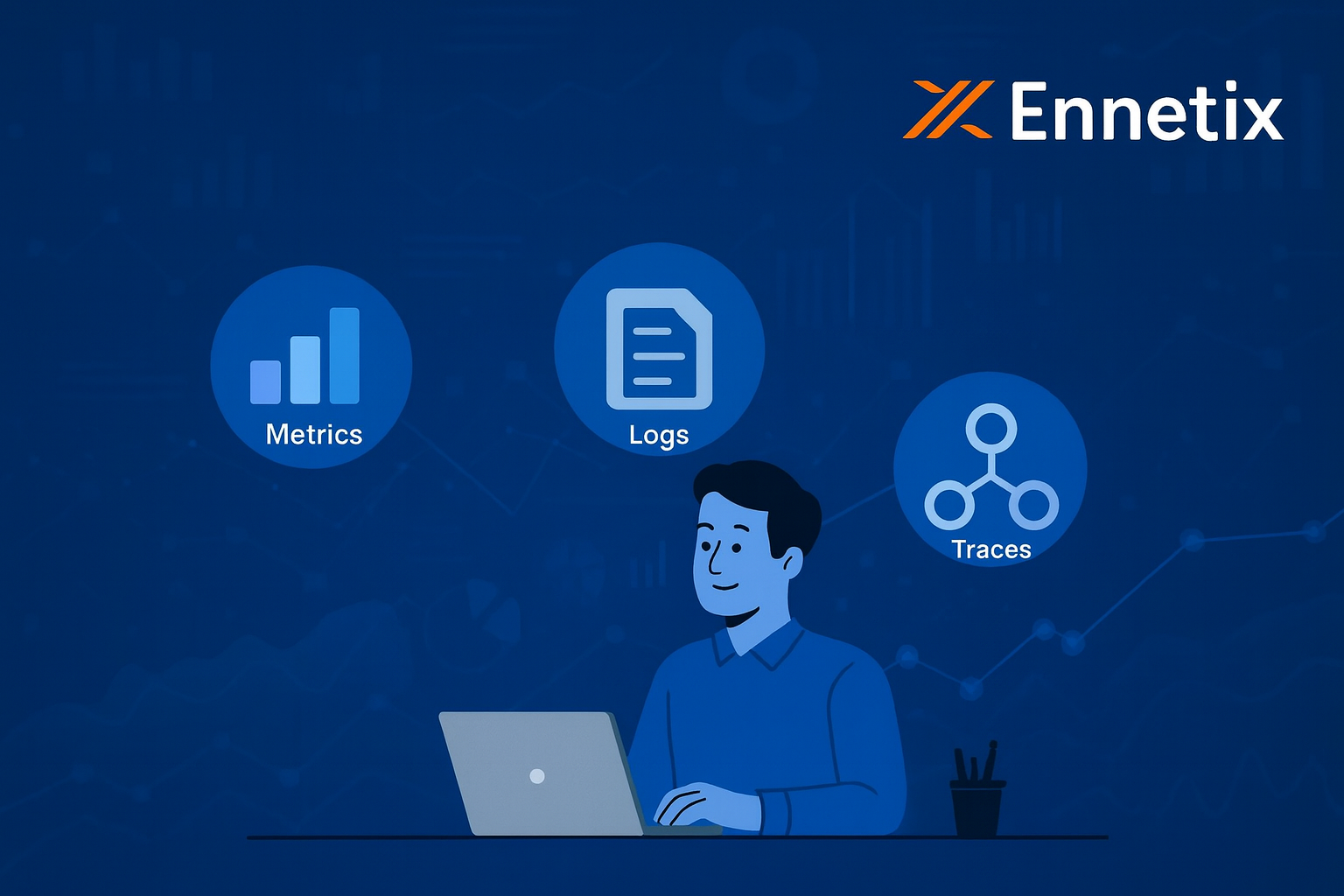
How unified observability connects performance monitoring with security intelligence, eliminating the context-switching that slows every investigation.
How AI-powered anomaly detection helps teams identify issues before they escalate, reducing alert fatigue while catching what matters most.
How correlated data across infrastructure, applications, and networks speeds up incident resolution and reduces mean time to resolution.
How organizations reduce downtime, enhance system reliability, and strengthen security posture without adding tool sprawl.
What signals maturity in a unified observability platform versus marketing claims that don't hold under real enterprise load.
Prof. Dr. Bis Mukherjee is the Founder and President of Ennetix, and a Distinguished Professor at UC Davis. He holds a Ph.D. in Electrical Engineering from the University of Washington, Seattle, and a B.Tech. (Hons.) in Electronics Engineering from IIT Kharagpur.
A renowned researcher and technology leader with extensive experience in network security, distributed systems, and advanced analytics. His groundbreaking contributions include the Network Intrusion Detection System (1990), Firewall (1989), Dynamic bandwidth allocation for EPON/FTTH (2002), and Optical-wireless integration (2007), now foundational to 5G Fronthaul.
Pulak Chowdhury is the Founder and CTO of Ennetix, holding a Ph.D. in Computer Science from UC Davis. A technology innovator specializing in advanced analytics, observability systems, and AI-powered IT operations.
At Ennetix, Pulak provides the architectural vision behind the xVisor platform and leads the engineering efforts that power its development. His research focuses on building intelligent systems that enhance visibility and resilience across complex IT infrastructures.
Light on theory, heavy on operational patterns you can apply the next day.
If your team is responsible for uptime, performance, or security posture in a hybrid environment, this session was designed for you.
Walk away with a clearer understanding of how modern IT teams can move beyond traditional monitoring toward more intelligent, integrated observability frameworks, not a vendor pitch.
Strategic leaders accountable for technology and security outcomes
Managing uptime, incident response, and infrastructure health
Responsible for distributed systems and hybrid connectivity
Monitoring threats, anomalies, and security posture across environments
Ennetix delivers AI-driven IT operations and security observability through its flagship AIOps platform, xVisor. By unifying performance monitoring and security observability, Ennetix helps organizations operate more efficiently while strengthening resilience.
xVisor provides holistic visibility across complex IT environments, enabling real-time anomaly detection across cloud, on-prem, and hybrid infrastructures.
AI-driven correlation automatically traces symptoms to root causes, reducing mean time to resolution and freeing teams from manual investigation.
Unified performance and security observability surfaces actionable threat intelligence, helping organizations strengthen resilience without adding tool sprawl.
Free, live, and built for the people running production infrastructure.